
Apple (Seb) in Pakistan: Kala Kulu, Golden and Amri, the Season, Nutrition and How to Choose Crisp, Sweet Apples
2026-11-28 · 6 min read
📖 اردو میں پڑھیں
The apple, or seb, is the fruit you can find in almost every Pakistani home and market for most of the year. It comes fresh from the orchards from the middle of summer, and stored apples stay in the markets through the winter. Dark red Kala Kulu from Quetta, yellow Golden apples and firm Amri apples are favourites with everyone. This article gives a simple introduction to the apple: where it grows, the main types, what it contains, and how to choose, store and enjoy it.
Part 1: About the apple
- Scientific name: Malus domestica
- Urdu name: سیب (seb)
- How much Pakistan grows: roughly 7 lakh tonnes a year, from about 2 lakh acres of orchards.
- Main growing areas: most of Pakistan's apples come from the cool highlands of Balochistan — Quetta, Pishin, Killa Abdullah, Killa Saifullah, Kalat, Mastung and Ziarat. Smaller amounts come from Khyber Pakhtunkhwa (Swat and other hill valleys), Gilgit-Baltistan (Hunza, Nagar, Skardu, Ghizer), Azad Kashmir and the Murree hills.
- Season: the fresh harvest runs from about mid-July to October. In Gilgit-Baltistan picking starts in late August and peaks in September and October.
The apple tree needs a long, cold winter to flower well, which is why it grows in the hills and not in the hot plains. A new tree usually starts giving fruit after 5–6 years; improved trees on small rootstocks can start in 3–4 years.
Part 2: Famous types in Pakistan
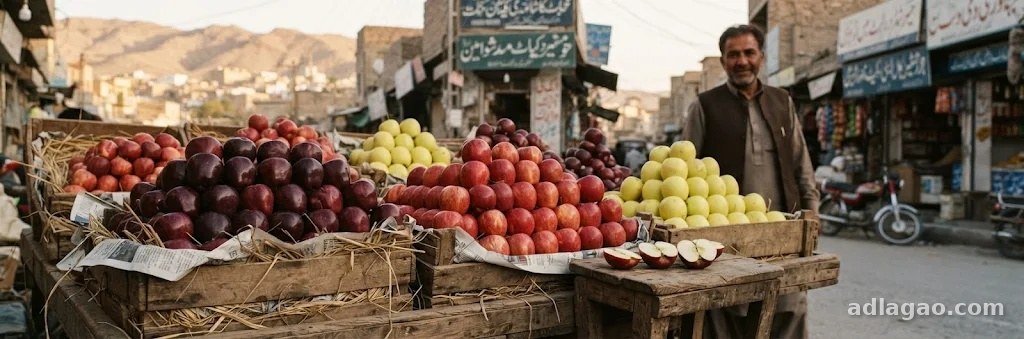
- Kala Kulu / Tor Kulu: the famous dark red, almost purple apple of Balochistan (a Red Delicious type). Crisp, sweet and stores well.
- Shin Kulu / Golden: the yellow-green Golden Delicious. Sweet and juicy, and in high demand in local and export markets.
- Amri: a firm, late apple that keeps for a long time, so you often see it in winter.
- Mashadi, Kaja (Gaja) and Kashmiri: older local types grown in Balochistan, Gilgit-Baltistan and Kashmir.
- Newer types: Royal Gala, Skyspur and Summer Red are planted more and more.
Each area has its own local names, so the same apple may be sold under a different name in another city.
Part 3: What does it contain?
Approximate values for 100 grams of raw apple with the skin:
| Nutrient | Amount (approx.) |
|---|---|
| Energy | about 52 calories |
| Water | about 86% |
| Carbohydrates | about 14 g, of which natural sugars about 10 g |
| Fibre | about 2.4 g |
| Vitamin C | about 5 mg |
| Potassium | about 107 mg |
| Fat and protein | very little |
A medium apple (about 150 g) gives roughly 75–80 calories and 3.5 g of fibre. A good part of the fibre and the colourful plant compounds are in the skin, so eat apples with the skin after washing them well.
An apple is a healthy, filling snack, but it is not a medicine. The old saying "an apple a day keeps the doctor away" means a good diet helps — it does not replace a doctor.
Part 4: How to choose good apples
- Firm and heavy: a good apple feels heavy for its size and firm all around. Press gently — it should not feel soft or spongy.
- Skin: smooth and bright, without wrinkles, cuts, soft brown spots or bruises.
- Colour: depends on the type — deep red for Kala Kulu, even yellow for Golden. Colour alone does not prove sweetness; ask the seller to cut one if you can.
- Smell: a fresh apple smells fresh and sweet, not sour or like alcohol.
- Stem: apples with the stem still attached usually keep better.
- Wax: apples make their own natural wax, and packers may also add a thin food-grade wax for shine. Wash apples under running water and rub them before eating.
- Late in the season: apples sold in spring have usually come out of cold storage. They are fine to eat, but check that they are still crisp.
Part 5: Storing apples
- At room temperature apples stay good for some days; in the fridge (vegetable drawer) they stay crisp for weeks.
- Apples give off a natural gas (ethylene) that ripens other fruit and vegetables faster. Keep them away from bananas, leafy greens and other produce, or in a separate bag.
- Do not store apples with onions or potatoes — they can pick up the smell and spoil faster.
- One bad apple can spoil the others: check your basket or crate and take out soft or rotten ones.
- Cut apples turn brown in the air. A little lemon juice slows this down.
Part 6: Ways to enjoy them
- Whole with the skin — the simplest and most filling way.
- Fruit chaat with guava, banana and chaat masala.
- Custard and trifle with apple pieces.
- Seb ka murabba (apple preserve) and apple chutney.
- Baked or stewed apple with a little cinnamon — soft and good for older people and children.
- Apple shake and juice: tasty, but a glass of juice has less fibre than a whole apple and is easy to over-drink. Shakes with extra sugar add a lot of calories.
Part 7: For sellers and farmers
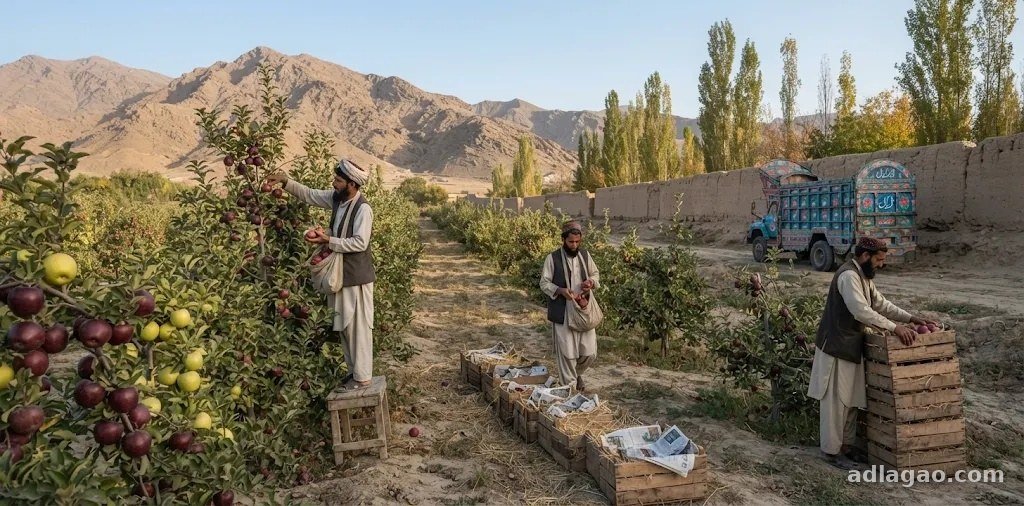
- Pick apples at the right stage, handle them gently and pack them in crates (peti) with padding — bruised apples rot fast.
- Sort out cut, bruised or damaged fruit before packing.
- Most apples from Balochistan go to wholesale markets and cold storage in other cities. Good cold storage keeps apples for several months, so they can be sold when prices are better. Unreliable electricity raises cold storage costs, so ask about backup power.
- Water is a growing problem in Balochistan's apple areas — drip irrigation and good orchard care save water.
- New plants: buy healthy, true-to-type plants from a trusted nursery.
On AdLagao: Fruits & Vegetables for selling apples, Plants & Nursery for apple plants, Seeds, Fertilizer & Sprays for orchard inputs, and Movers & Goods Transport for moving crates to the city.
Part 8: Be careful
- Small children and choking: raw apple pieces are one of the common choking foods for babies and small children. For babies and toddlers, grate the apple, slice it very thin, or cook it soft. Remove the core and seeds, and make sure children sit down while eating.
- Seeds: apple seeds contain a natural compound that can release cyanide when the seeds are chewed or crushed. Swallowing a few seeds by mistake is not dangerous, but do not chew or crush large numbers of seeds, and remove the core for children.
- Wash well: apples may carry dust and farm sprays.
- Diabetes: a whole apple in a normal portion is usually fine as part of a meal plan; juice, murabba and sweet shakes have much more sugar. Ask your doctor or dietitian what suits you.
- Allergy: if your mouth, lips or throat itch or swell after eating apples, stop and see a doctor.
This article is for general information only. It is not a diagnosis or treatment for any disease and it does not replace a doctor's advice.
Sell fruit? Post a free fruit and vegetable ad on AdLagao — buyers in your city can call or chat with you directly.
More articles


